
Mourning America
On the Fourth of July, I am grieving the country that saved my family and reimagining what freedom could be

Contemplations
Can you reimagine freedom and liberation outside the context of America? What does it look like? Feel like?
Is it possible to access, by our own means, the sovereignty we are not given?
I am flying back to the United States on the Fourth of July after spending a week and a half in Europe. It was a friends’ trip for two milestone birthdays — my 40th, her 50th. We planned it almost a year ago when the landscape of our personal and collective worlds was very different.
I’ve spent the last 10 days listening to different perspectives on America — expats saying it’s still one of the best countries in the world to live in, and also seeing a lot of grimaces from those who only know our country through our President’s actions.
Not once in any of these conversations did I defend the United States. In fact, it became a running joke to apologize that I was American.
Underneath my humor, of course, was shame and grief, the bubbling desire of imagining what it would feel like to live somewhere else.
It’s a marked difference from how I felt growing up. I remember the sense of pride I felt hearing the national anthem when I was a kid. Hand on my chest, I could feel my heart racing with purpose, my body at full attention, rooted so firmly in the soil of what I thought was freedom.
I recited the Pledge of Allegiance with such fervor. Of course this country had my will, had my soul, had me — after everything it had done for my family: taken us in, provided refuge, sheltered us, gave us a better life. Let us touch a type of liberty that felt unfathomable in our native land, no longer safe where my ancestors once were. Made us believe that we could now call this home.
I teared up, goosebumps rising on the tops of my arms, a cool breeze shooting up my spine, when I heard “America the Beautiful” on TV, watching the fireworks that inevitably lit up the night sky at a football game. I felt the soaring lyrics pulse through my body and believed that America was a chosen land, from a God that I was told was not mine. The same God that was weaponized to make me believe I would have to earn my place here if I didn’t want to be labeled as “The Other.”
Đây là nước của họ, my mother said — This is their country — every time someone would pull back their eyes, talk about a happy ending, or mock my parents’ accent.
For 250 years now, the idea of America has been a beacon, a bastion of light for people like my parents as they forced their bodies into the underbelly of a fishing boat off the shores of a bloody, sacred, and lost Vietnam, riding through the rocky waters of the Pacific Ocean — all for the promise of freedom, of a better life for themselves and their children. For me.
And they, we, did make a life. And it is a much better life than the one we would have had in the war-torn Vietnam that would have surely killed my parents if they had stayed. The fact that I am here, mourning America, is a testament that something worked.
**
But perhaps the suffering behind this wound is the tension between the reality and the idea of what American could be. And as more time passes and as I see more of the world, the veil of America has lifted up so high that I can see the myth of what it is so clearly.
We are #1 in gun deaths and #1 in incarceration among high-income nations. We have the largest economy on Earth and the most billionaires in the world, yet nearly 40% of Americans say they would struggle to cover a $400 expense. We spend more on healthcare than any other high-income country, but the US is the most dangerous place among wealthy nations to give birth — especially for Black women, who are three times more likely to die.
The reality is, I have been mourning America since the first time Trump got elected, but there is a cynicism, an apathy, seeping into my bones and consciousness in a way it never has before.
This year, we’ve watched an executive order try to strip citizenship from babies born on this land — the same birthright that made children of refugees into Americans. We’ve watched people, children disappear into inhumane detention cells after traffic stops, held without bond, in the name of keeping us “safe.” We’ve watched armed, untrained militant radical storm onto the streets of our own cities, hunting and killing fellow American citizens for a big, quick buck. And we’ve watched as our country bombed seven countries in a single year — collaborators in genocide, killing more than a hundred people in boats on open water, toppling a government, and evicerating a school of innocent girls.
All for the coveted prize of oil and power.
So what do I do when the very country that saved my parents, saved us, is now a nightmare? What do I do now with the insight that the American empire is real? That I, as a Queer kid of refugees, have both benefited and suffered from its grip? What do I do when the remaining pride I have for this country has twisted itself into an unnamed shame that suffocates me every day?
Every time I read a headline. Every time I hear his voice.
Every time I hear “illegal,” all I can see are my parents working endless hours believing that the American dream would one day be real. All I see when this administration strips immigrant mothers and children down is how I stripped myself of my ancestral roots hoping I could fool everyone — including myself — that I was white. All I see is a similar kind of fascism — the same kind my parents fled from, so their children and grandchildren would never have to live through what they lived through. But yet here we are, three generations bearing witness to history repeating itself.
What do I do with the distinct privilege I hold as an immigrant kid who both understands the pain these immigrant families feel, but also will never understand? What do I do with the fact that my life exists purely because the global geopolitical landscape saw us as useful pawns in a game claimed to be for democracy? When in actuality, if we had been from somewhere else, or from another time, all of this could have been different? We could have been carted away, tortured, shot in the name of safety.
I see so clearly that the savior has always and continues to be the oppressor.
To see America burn to the ground is not just a dismantling of democracy but a disintegration of my heart, my whole being, my understanding of the world. If America is no longer the Land of the Free, is freedom even possible?
**
So now what?
I have been sitting with this question for months, opting to turn off the news instead of letting myself drown in the divisive, visceral hate speech spewing from all corners of the Internet.
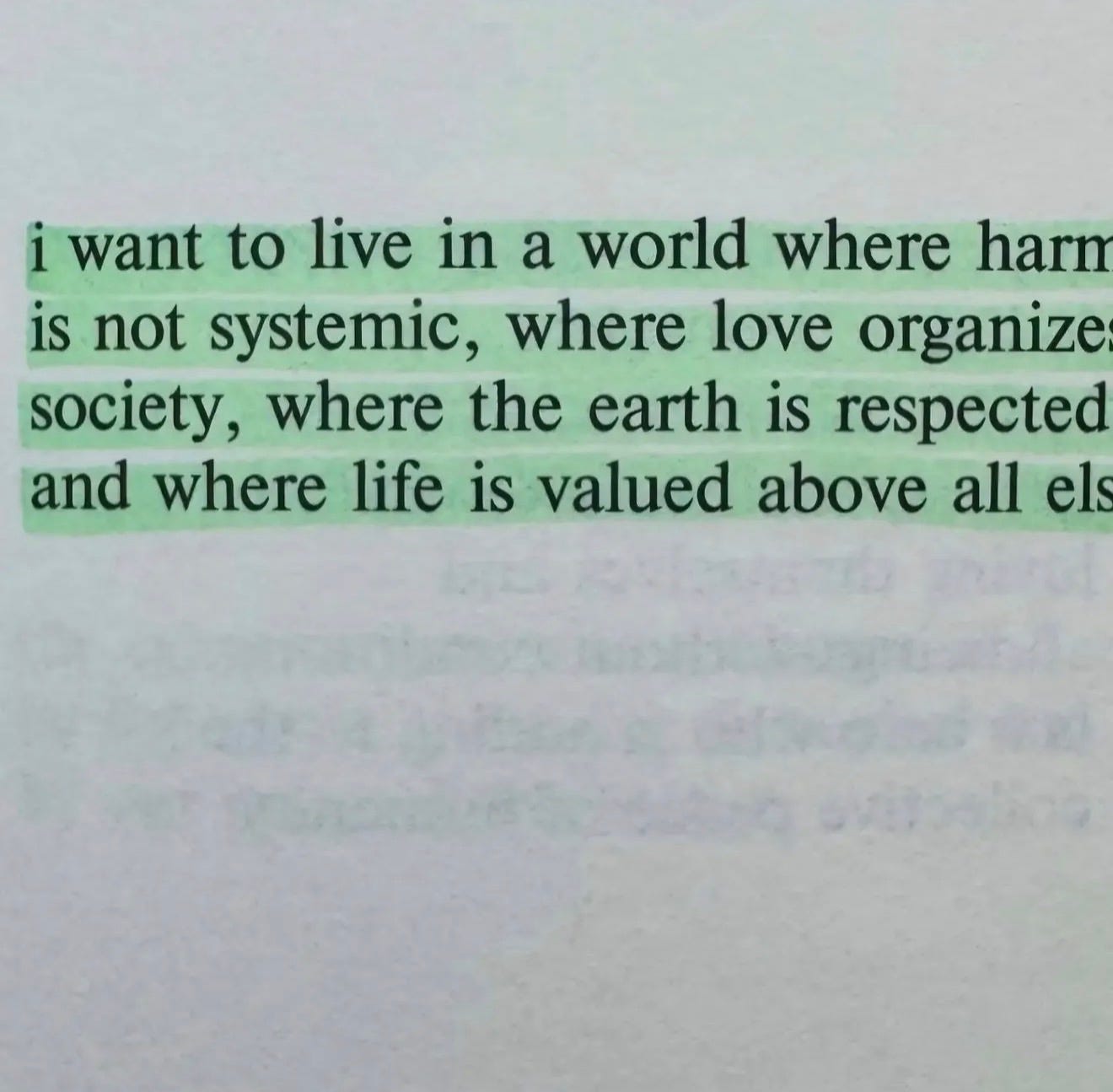
Perhaps the apathy I am feeling comes from not believing that tweaking the oppressive systems we live in will lessen our suffering. So instead, I have been imagining: What would it look like to live in a world governed by kindness and compassion? Where we prioritized the lives of those most in need?
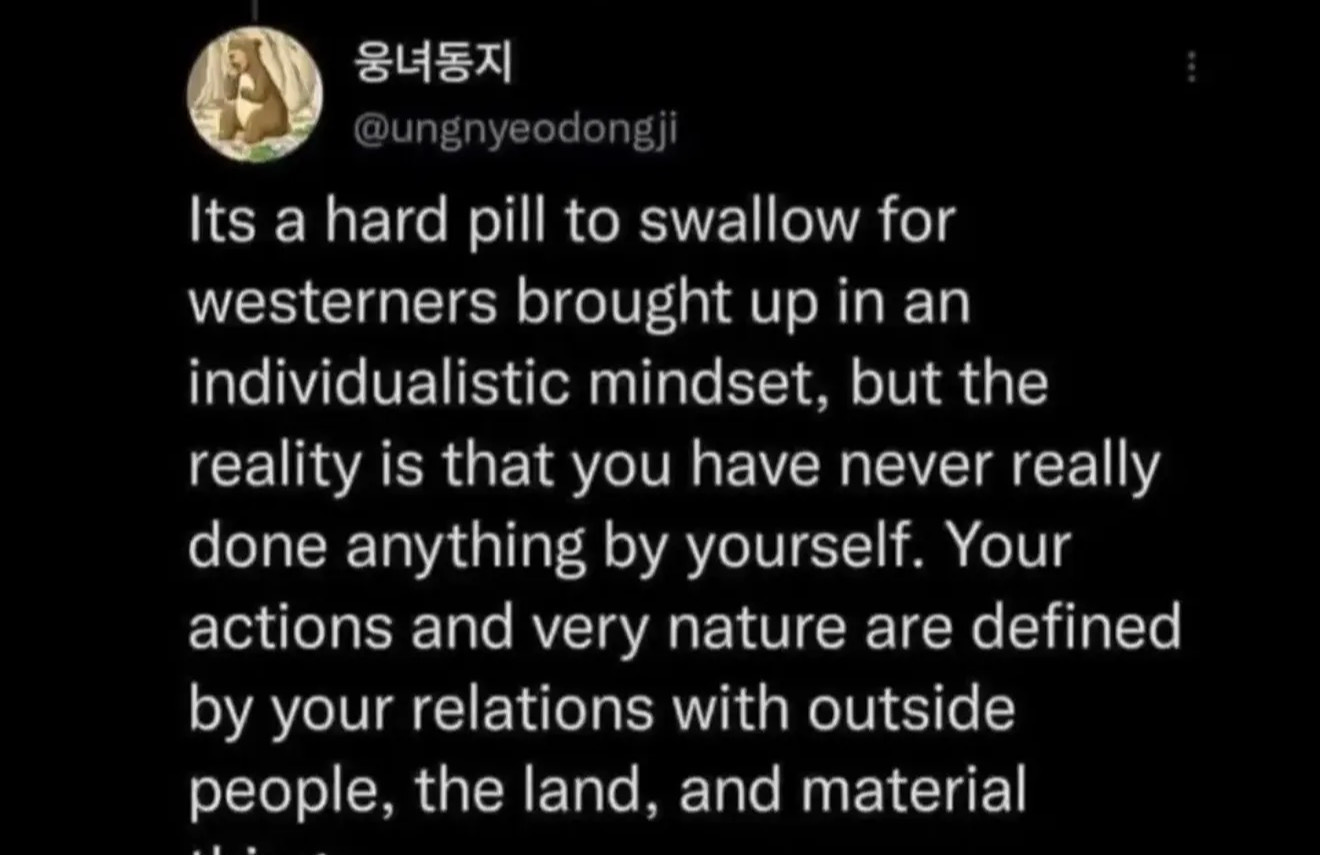
In Buddhism, one of the greatest teachings is emptiness and interdependence — what Zen Master Thích Nhất Hạnh called interbeing. The fact that we are not, and cannot be separate — no matter how many times we have tried to make ourselves believe otherwise. Our actions affect each other. We cannot live without each other; the trees, the oceans, the animals and other living beings here feed and nourish us in a way that modern society exploits as part of privilege and culture.
Interbeing is the understanding that nothing exists separately from anything else. We are all interconnected. By taking care of another person, you take care of yourself. By taking care of yourself, you take care of the other person. Happiness and safety are not individual matters. If you suffer, I suffer. If you are not safe, I am not safe. There is no way for me to be truly happy if you are suffering. If you can smile, I can smile too. The understanding of interbeing is very important. It helps us to remove the illusion of loneliness, and transform the anger that comes from the feeling of separation.
We need the vision of interbeing — we belong to each other; we cannot cut reality into pieces. The well-being of “this” is the well-being of “that,” so we have to do things together. Every side is “our side”; there is no evil side.
— Zen Master Thích Nhất Hạnh writes in How To Fight
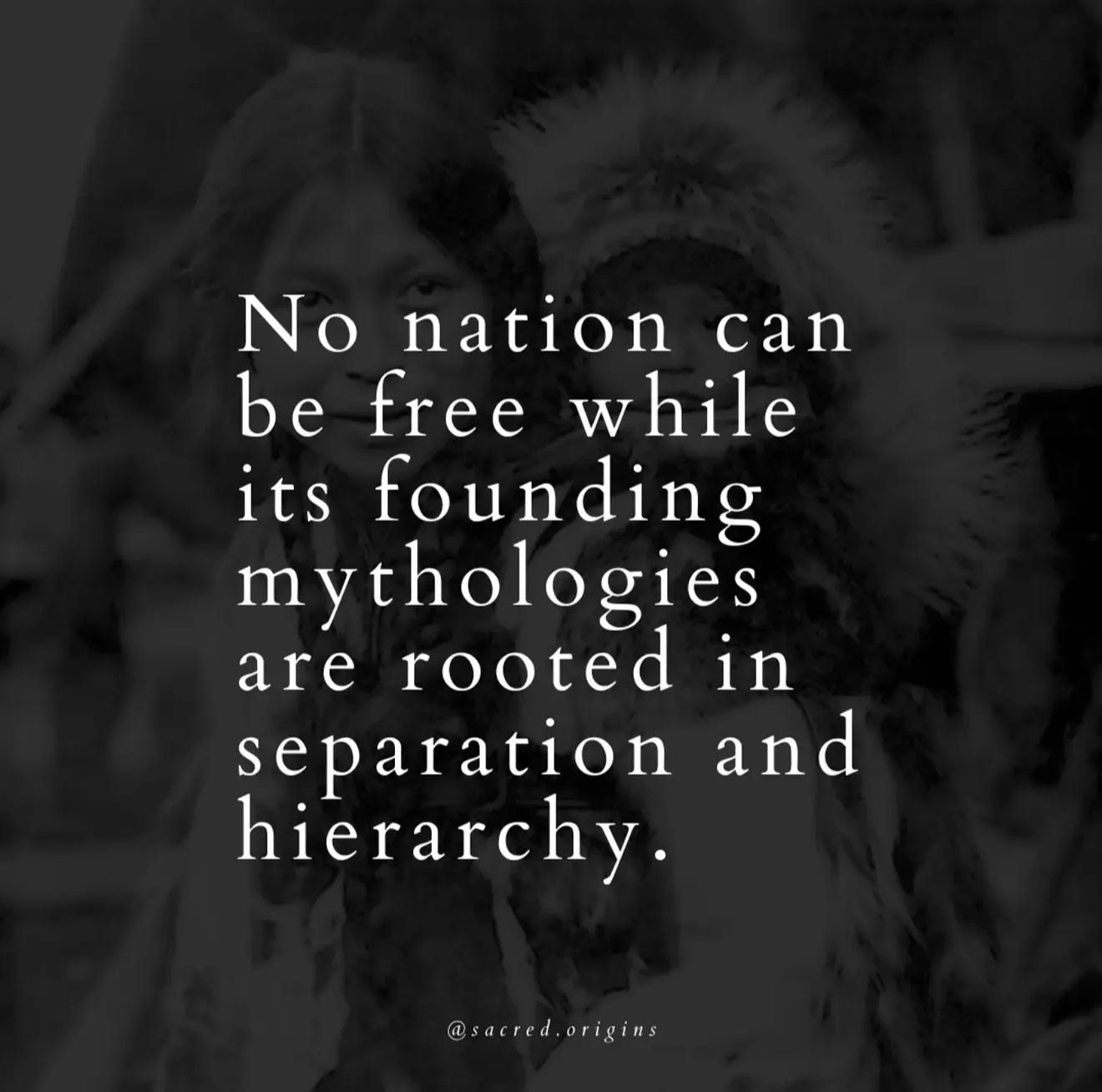
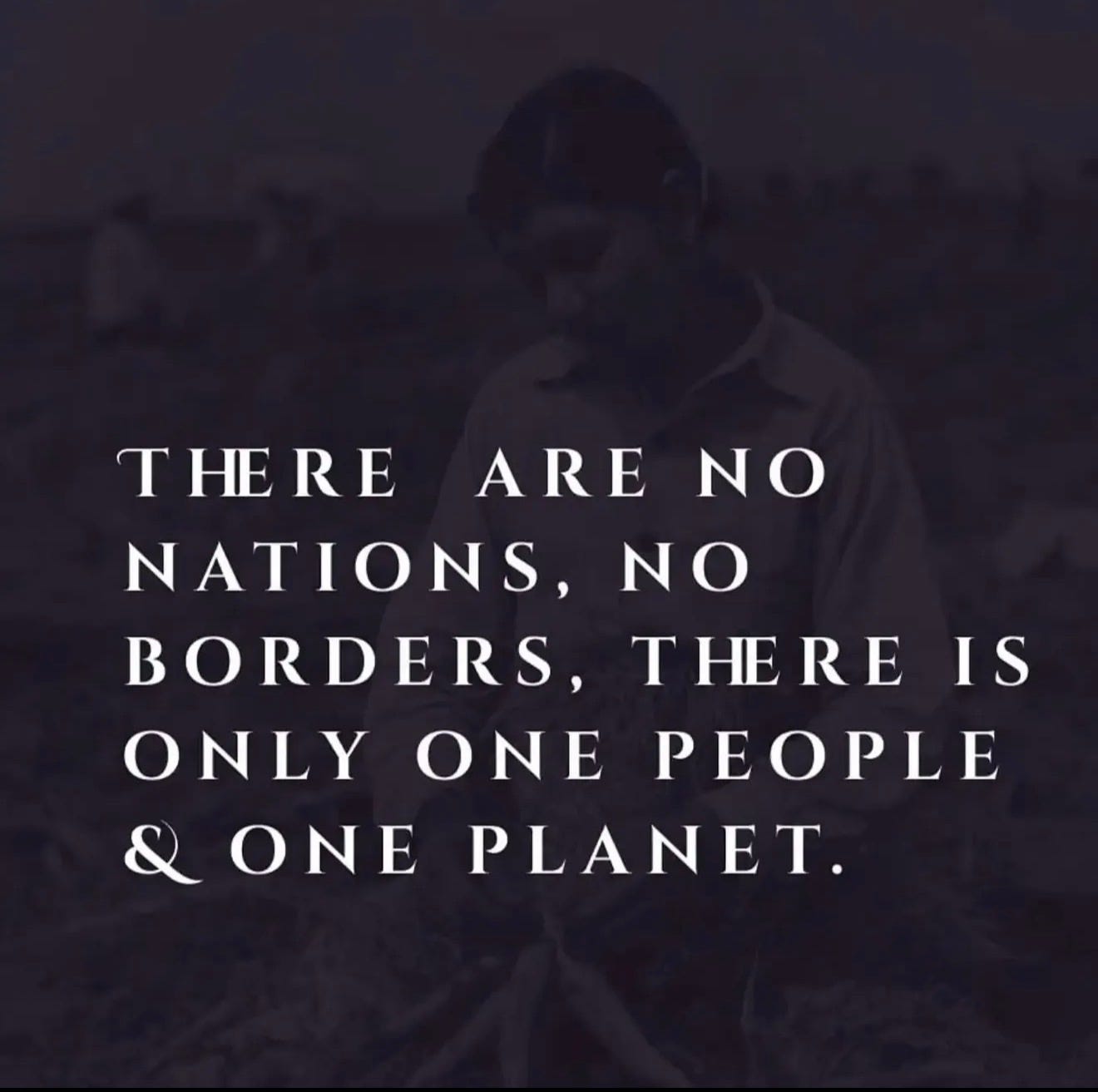
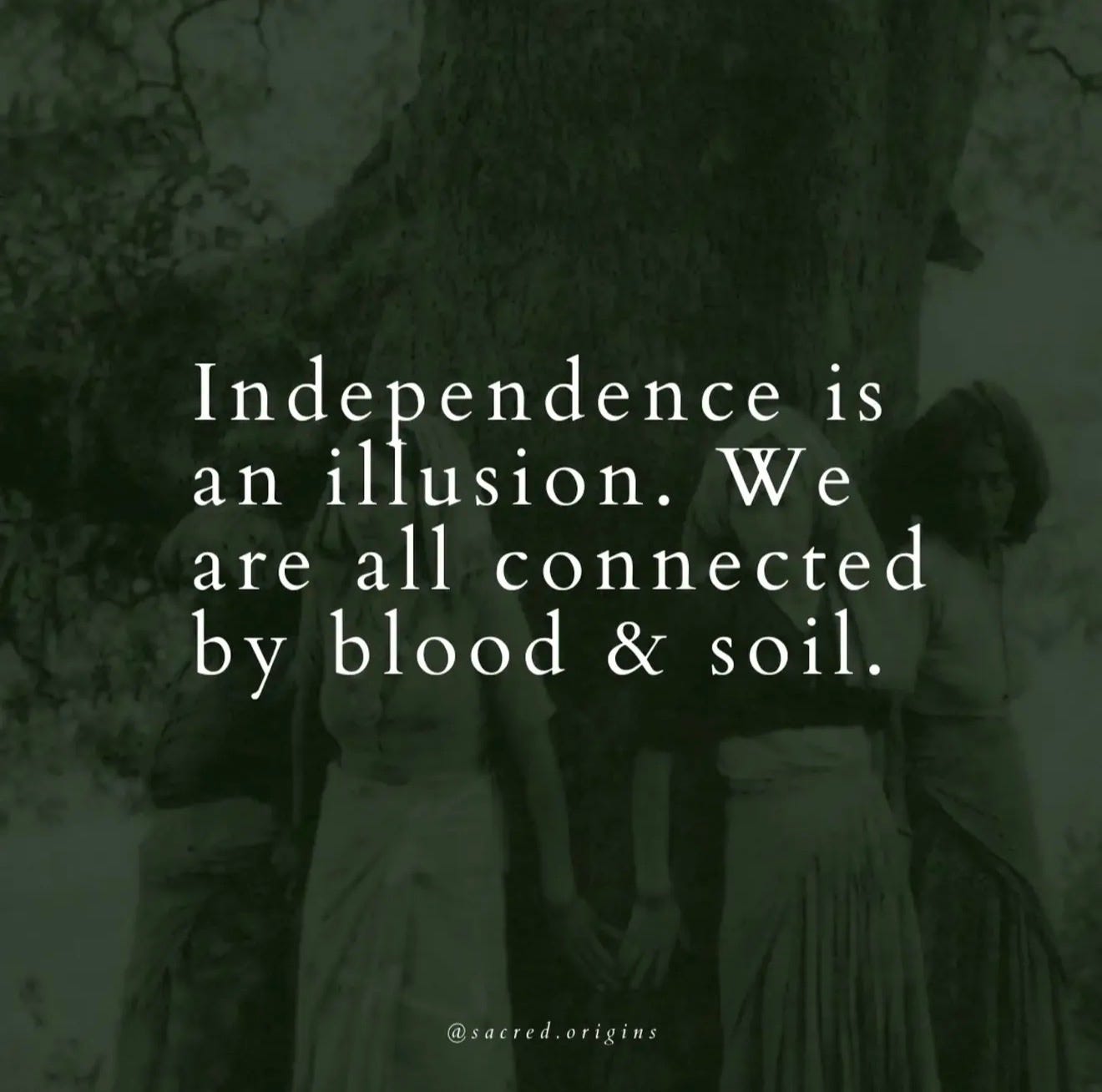
Which makes me wonder, on this day of all days: does independence even exist? Is it just an idea that we humans have made up to make sense of the world and to tame our egos? Is The path for collective freedom to celebrate the birth of a nation based on separation — a declaration that a country could sever itself from others and stand alone on stolen land?
But here’s the truth: nothing can stand alone. Not a person. Not a country. Perhaps this is why my disdain for the US grows every time I travel because other countries understand this. They don’t feign and perpetuate the idea that isolation is the superior path forward the way America has throughout history in the name of freedom.
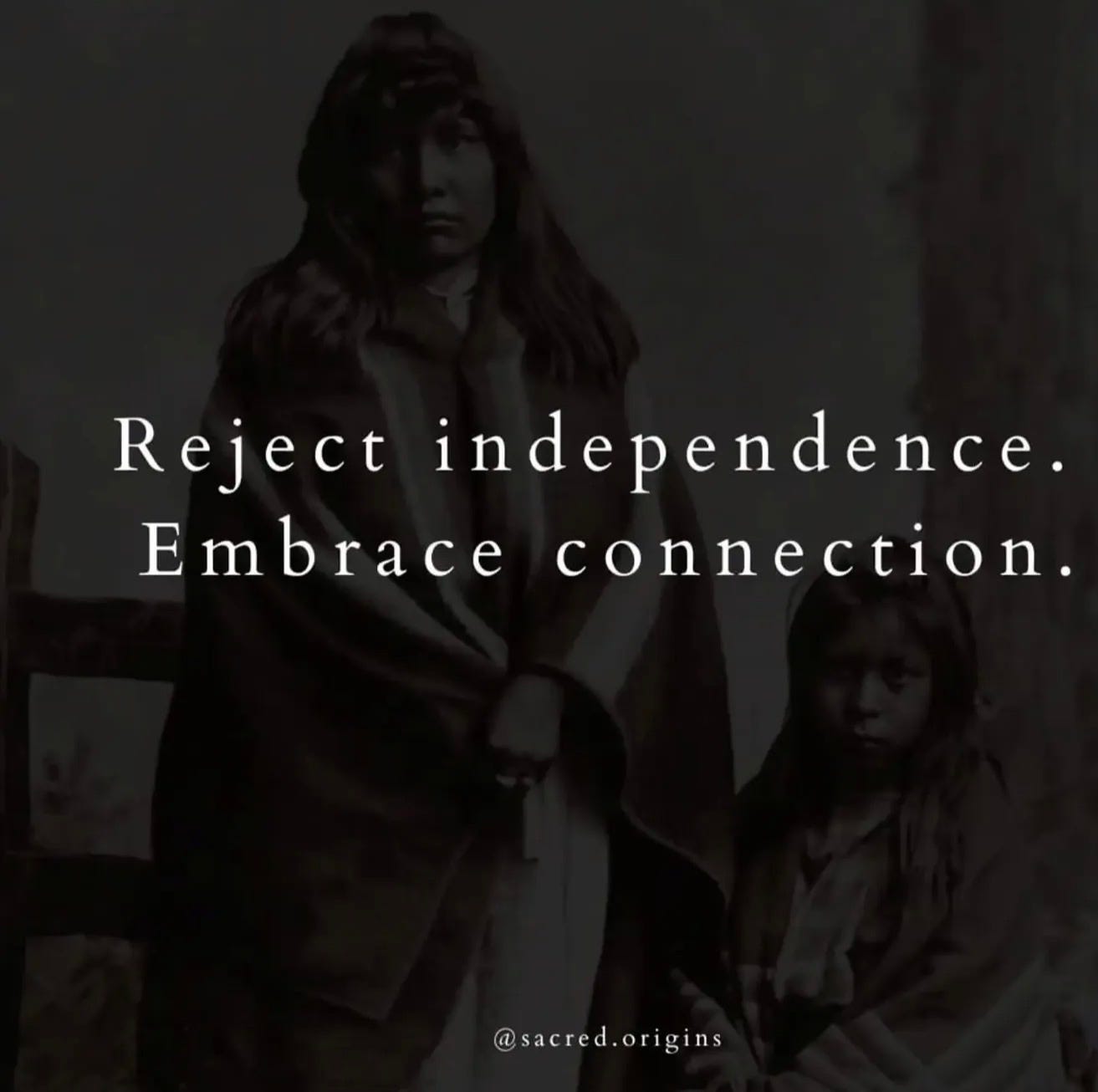
So maybe freedom was never about independence — maybe it has always been about belonging to each other and finding liberation together.
I know Interbeing can be abstract concept. But all you have to do is think about all the things that had to happen for you to be here in this moment to see how tangible it is. The people who have made you who you are — going back millennium. The plants and animals that have fed you. The trees and sky and rain that have made it possible for us to breathe and be alive in this very moment.
Right here, right now.
That feeling of being bigger than who we are — that is interbeing.
I don’t have the solutions for how to make our country better, nor do I plan to celebrate the myth of a nation — no matter how much I love hot dogs 🌭
But I do hope today invites you to think about what true freedom and collective liberation might look like. For me, it looks like the death of capitalism, and for us to return to an indigenous and collective mindset. My hope is for us to see and always center our humanity, and for us to value people over profits.
Yes I can deeply appreciate the revolutionary ideas that started and continues to run this country but perhaps it’s time to start imagining a new version of what freedom looks like. Let’s face it: those forefathers dreamed of a freedom that was never meant for me, but I can and will claim it.
And I hope that you, reading on the other side of this, will find ways for us to reimagine, to decolonize, the way we think about freedom too. For yourself, for all of us.
Today and every day.
Contemplations
Can you reimagine freedom and liberation outside the context of America? What does it look like? Feel like?
Is it possible to access, by our own means, the sovereignty we are not given?
Welcome back, dear one. Yes to all of this and yes to interdependence. 🙏🏼 🇺🇸 💟